


From Earth to Orbit: The Role of Robots and AI in Blue Origin’s Space Exploration Goals


Blue Origin, founded by Jeff Bezos, envisions a future where millions of people are living and working in space to benefit Earth. This ambitious goal transcends mere space tourism; it encompasses sustainable human presence on the Moon, deep-space exploration, and the establishment of a robust cislunar economy. Achieving such monumental feats hinges not only on powerful rockets and advanced spacecraft but increasingly on the seamless integration of robotics and artificial intelligence (AI) across every facet of their operations, from manufacturing to lunar surface activities.
Automating the Ascent: Robots and AI in Rocketry
Before any mission leaves Earth, robots and AI are already at work within Blue Origin’s terrestrial facilities, enhancing efficiency, precision, and safety in rocket development and production:
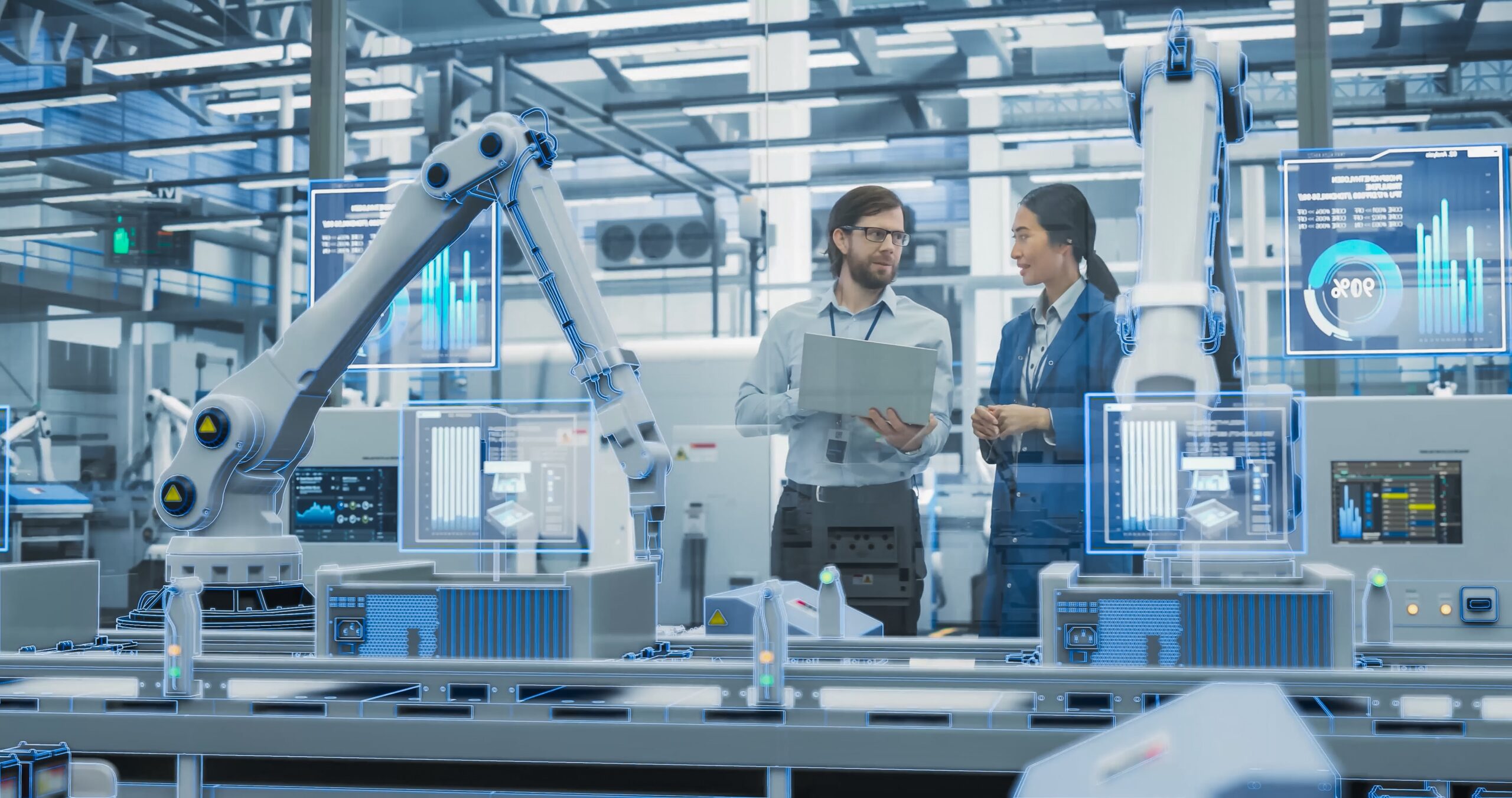
- Manufacturing Precision: In their state-of-the-art facilities in Kent, Washington, and Huntsville, Alabama (home to their engine production), automation plays a crucial role. While specific details on proprietary manufacturing robotics are limited, the sheer scale and complexity of producing advanced engines like the BE-4 (which powers both Blue Origin’s New Glenn and ULA’s Vulcan Centaur) necessitate high levels of automation. This ensures consistent quality, reduces human error, and accelerates production rates.
- Automated Flight Systems (New Shepard): Blue Origin’s suborbital New Shepard rocket system, designed for human spaceflight and research payloads, is fully autonomous. There are no pilots onboard. AI-driven systems handle all aspects of flight, from vertical takeoff and ascent to a precise pinpoint landing, demonstrating a high degree of robotic control and AI-powered decision-making in real-time. This level of autonomy is critical for reducing operational costs and increasing reusability.
- Engine Testing and Development: Robots and automated systems are integral to the rigorous testing of rocket engines like the BE-3 and BE-4 at sites in West Texas and Huntsville, AL. These systems perform full-thrust, full-duration burns and high-pressure preburner tests, collecting vast amounts of data. This data is then analyzed using advanced analytics and potentially AI to optimize engine performance, identify anomalies, and ensure reliability for multiple uses.
Journey to the Moon: AI and Robotics in Lunar Missions
Blue Origin’s aspirations for lunar exploration, particularly with its Blue Moon lunar lander program for NASA’s Artemis missions, heavily leverage robotics and AI for critical capabilities:
- Safe and Precise Lunar Landing (SPLICE): Blue Origin has collaborated with NASA to test robotic systems designed to solve one of the biggest challenges on the Moon: safely landing. The Safe and Precise Landing – Integrated Capabilities Evolution (SPLICE) project employs a combination of lasers (Navigation Doppler Lidar, Hazard Detection Lidar), cameras, and AI-powered algorithms to give spacecraft “artificial eyes and analytical capability” to avoid obstacles and find safe landing spots within designated ellipses. This system, tested on New Shepard flights, processes data 20 times per second to calculate distance, speed, and direction, a significant leap from manual adjustments made by Apollo astronauts.
- Autonomous Landers (Blue Moon Mark 1): The Blue Moon Mark 1, an autonomous lunar cargo lander, is designed to deliver up to three metric tons anywhere on the lunar surface. This uncrewed mission relies heavily on its internal flight computers, avionics, and power systems, which are shared with the larger human lander (Mark 2), indicating a high degree of robotic autonomy for navigation, descent, and payload deployment.
- Guidance, Navigation, and Control (GNC): AI plays a pivotal role in refining GNC systems for lunar spacecraft. By quickly analyzing massive datasets of sensor information (position, velocity, orientation), AI algorithms can detect anomalies, optimize trajectories, and ensure the precision needed for soft, pinpoint landings on complex lunar terrain.
Beyond Landing: Robots and AI for Lunar Sustainability
Blue Origin’s long-term vision extends beyond mere visits, aiming for a permanent human presence on the Moon. This ambitious goal necessitates In-Situ Resource Utilization (ISRU) – living off the land – where robots and AI become indispensable:
- Lunar Resource Extraction (Blue Alchemist): Blue Origin is pioneering technologies like Blue Alchemist, which focuses on making solar cells and transmission wire directly from lunar regolith (moondust). While the process itself is highly engineered, the deployment and operation of systems to dig, collect, process, and transfer lunar samples for resource extraction will heavily rely on specialized robots.
- Robotic Arms and Manipulators: Through its Honeybee Robotics division, Blue Origin develops end-to-end robotic solutions critical for lunar activities. Examples include 4-Degree-of-Freedom (DOF) robotic arms for drilling, scooping, and landing pad construction, as well as 3-DOF arms for tasks like iron ore blasthole sampling. These tools are vital for everything from scientific sample collection to preparing sites for habitats.
- Planetary Rovers and Mobility Solutions: Blue Origin is building planetary rovers equipped with hardware, avionics, software, navigation, and path planning capabilities. These autonomous or semi-autonomous rovers will conduct “ground truth” missions, analyzing soil and subsurface ice to confirm resource quantity and quality, crucial for ISRU. A Honeybee Robotics 100 kg-class rover is slated to fly to Gruithuisen Domes in 2028.
- Space-Based Construction: Establishing sustainable settlements on the Moon will require robotic construction technologies to build and maintain essential space infrastructure, reducing the need for human spacewalks in hazardous environments. AI systems managing these robotic construction efforts will ensure precision and efficiency.
- Autonomous Resource Monitoring: AI will directly support sustainable human communities by watching over vital resources and making their extraction processes more effective, potentially allowing for self-sufficient lunar bases.
AI in Mission Operations and Beyond
Across all mission phases, AI is increasingly enhancing Blue Origin’s capabilities:
- Data Analysis: Space missions generate colossal amounts of telemetry and scientific data. AI algorithms are crucial for rapidly analyzing these massive datasets, spotting patterns, identifying anomalies, and accelerating discoveries from images of galaxies to planetary measurements. Blue Origin itself leverages platforms like Databricks on AWS GovCloud for real-time analytics and AI-driven tools, including optimizing manufacturing and processing massive telemetry data.
- Mission Planning and Optimization: AI, particularly techniques like reinforcement learning, can be used to calculate optimal flight paths for spacecraft, ensuring fuel efficiency and minimizing transit times for complex missions to the Moon and beyond.
- Astronaut Support: While Blue Origin is committed to human spaceflight, AI systems can support astronauts by monitoring their health, managing life support systems, and even offering psychological support during long-duration missions. Robotic assistants can also help with routine tasks, allowing astronauts to focus on higher-level objectives.
Blue Origin’s vision of humanity expanding into space is not just about building bigger rockets; it’s about building a future where sophisticated robots and intelligent AI systems serve as indispensable partners. From automated launch sequences and precision lunar landings to the fundamental task of building sustainable bases through resource extraction and construction, AI and robotics are not just tools, they are the very enablers of Blue Origin’s goals, paving the road to space for generations to come.