




Intel’s Comeback Plan: Can Lunar and Arrow Lake Compete in the AI Era?

For a long time, Intel was the default choice for computer processors. But in recent years, it lost ground to competitors like AMD with its Ryzen chips, and Apple with its highly efficient Apple Silicon. Now, Intel is trying to make a strong comeback with a new generation of processors—Lunar Lake and Arrow Lake.
These aren’t just routine upgrades. They’re part of a bigger plan to rebuild Intel’s position in a world where computing is increasingly shaped by artificial intelligence. The real question is whether these chips are good enough to compete in that new reality.
A Shift in How Intel Builds Chips
Both Lunar Lake (often referred to as Core Ultra 200V series) and Arrow Lake (Core Ultra 200H/HX series anWith Lunar Lake and Arrow Lake, Intel is changing how it designs processors. Instead of building everything as one single piece, it’s using a modular approach. Different parts of the chip are built separately and then combined, allowing Intel to optimize performance and efficiency more effectively.
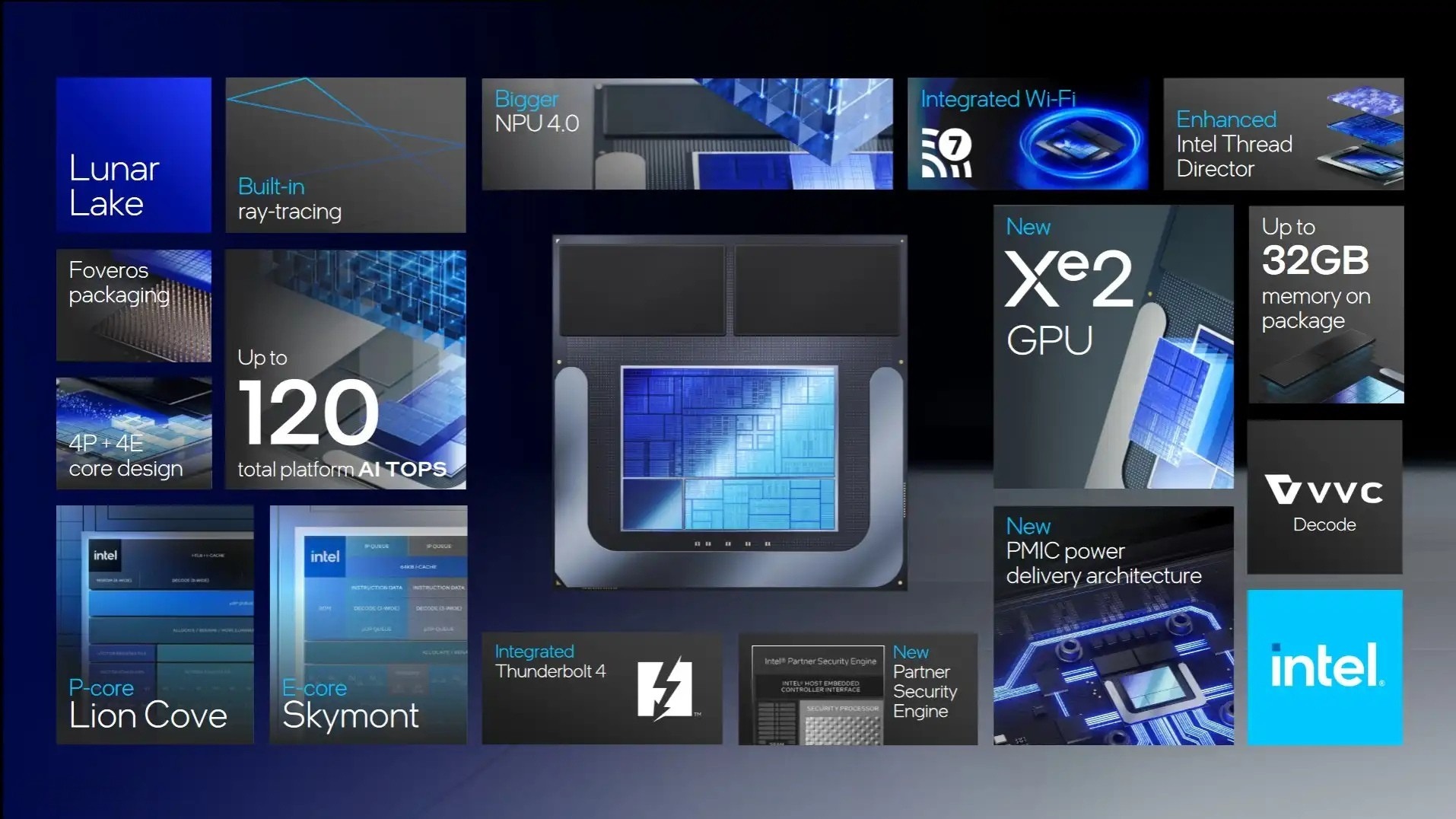
Inside these chips, Intel uses a mix of two types of cores. The first are Lion Cove cores, which are the high-performance cores built for demanding tasks like gaming, editing, or heavy applications. The second are Skymont cores, which are designed for efficiency. They handle background tasks and lighter workloads, helping reduce power consumption and improve multitasking.
This balance between power and efficiency is key to making modern systems feel fast without draining battery life.
The Big Focus: AI Performance
The biggest shift in these new chips is their focus on artificial intelligence. Both Lunar Lake and Arrow Lake include dedicated hardware called a Neural Processing Unit (NPU).
Instead of relying only on the CPU or graphics processor, the NPU is built specifically for AI tasks. This includes things like background blur in video calls, real-time translations, image editing, and other AI-powered features that are becoming more common in everyday apps.
By handling these tasks more efficiently, the NPU helps improve performance while also saving battery life, especially important for laptops.
Better Graphics Without a Separate GPU
Another important upgrade is Intel’s new integrated graphics. These chips use the new Xe2-LPG graphics architecture that significantly improves performance compared to earlier generations.
What this means for users is better performance in everyday visuals whether it’s streaming, light gaming, or creative work like photo and video editing. It also adds extra power for AI tasks, since graphics processors often work alongside the NPU for certain workloads.
For many users, this could reduce the need for a separate graphics card, especially in laptops.
Lunar Lake: Built for Thin and Light Laptops
Lunar Lake is designed mainly for ultra-portable laptops where battery life matters most. Intel has focused heavily on efficiency here, even integrating memory directly into the chip to reduce power usage and improve speed.
The result is a processor that aims to deliver strong performance while using less energy. Early results suggest that Lunar Lake performs particularly well in AI-related tasks and offers a noticeable boost in graphics performance compared to older Intel chips.
For everyday users, this could mean thinner laptops that last longer on a single charge without sacrificing too much performance.
Arrow Lake: More Power for Bigger Workloads
Arrow Lake is aimed at a broader range of devices, including high-performance laptops and desktop computers. Unlike Lunar Lake, it isn’t as limited by power constraints, so it focuses more on raw performance.
This makes it better suited for demanding tasks like content creation, heavy multitasking, and gaming. It also includes AI capabilities through its NPU, ensuring that AI features are available across both portable and high-performance systems.
In simple terms, Lunar Lake is about efficiency, while Arrow Lake is about scaling performance.
Competing in the AI Ring: How Do They Stack Up?
The competitive landscape is more challenging than ever. AMD’s Ryzen processors, particularly their Ryzen AI series, offer strong multi-core performance and increasingly capable integrated graphics and NPUs. Apple Silicon continues to set a high bar for performance per watt in MacBooks. Qualcomm is also entering the Windows laptop space with its Snapdragon X Elite/Plus chips, emphasizing AI performance and efficiency, particularly for Microsoft’s Copilot+ PC initiative.
Early benchmarks for Lunar Lake and Arrow Lake show promising results in certain areas:
- AI Performance: Intel’s new NPUs appear highly competitive in dedicated AI benchmarks.
- Integrated Graphics: The new Xe2 graphics show significant generational improvements, making integrated graphics more viable for light gaming and creative acceleration.
- Single-Core Performance: The new Lion Cove cores demonstrate strong performance in tasks that rely on single-threaded speed.
However, comparisons in multi-core performance, overall creative application benchmarks (like Adobe suites), and raw power efficiency under heavy load against the latest chips from AMD and Apple show a mixed picture. The competition remains incredibly tight, with each manufacturer having areas of strength.
Is This Intel’s Comeback Moment?
Lunar Lake and Arrow Lake are a clear step forward for Intel. With features like Lion Cove and Skymont cores, Xe2-LPG graphics, and dedicated AI hardware, these chips are built for how people actually use computers today.
That said, a true comeback depends on more than just good hardware. Pricing, real-world performance, software support, and how widely these chips are adopted will all play a role.
What’s clear is that Intel is no longer playing it safe. These new processors are designed to compete seriously in the AI era, and they bring the company back into the conversation in a meaningful way.
The result is a much more competitive landscape, and for users, that’s a good thing.