



Beyond the CPU and GPU: Exploring the Emerging Landscape of AI Accelerators on Your PC

The personal computer, long powered by the tandem of the Central Processing Unit (CPU) for general tasks and the Graphics Processing Unit (GPU) for visual rendering and parallel computation, is undergoing a profound transformation. While CPUs and GPUs remain vital, the escalating demands of Artificial Intelligence (AI) are ushering in a new era of specialized silicon: AI accelerators. These dedicated chips are redefining what your PC can do, moving AI processing from distant cloud servers directly onto your desktop or laptop.
Why Your PC Needs More Than Just a CPU and GPU for AI
While CPUs and GPUs are incredibly versatile, they aren’t always the most efficient for the unique demands of AI workloads, especially for on-device processing. Dedicated AI accelerators address several key challenges:
- Efficiency: They are designed to perform AI’s specific mathematical operations (like matrix multiplications) with significantly greater speed and lower power consumption than general-purpose CPUs or even GPUs. This means faster AI tasks and longer battery life for portable devices.
- Privacy & Security: Processing data locally on your PC, rather than sending it to cloud servers, inherently enhances privacy and reduces the risk of data breaches for sensitive AI tasks.
- Reduced Latency: On-device AI enables real-time responses, crucial for applications like live video effects, voice assistants, and immediate content generation, eliminating delays caused by network communication.
- Cost-Effectiveness: For frequent AI tasks, processing locally can reduce reliance on expensive cloud computing resources.
The Core of On-Device AI: Neural Processing Units (NPUs)
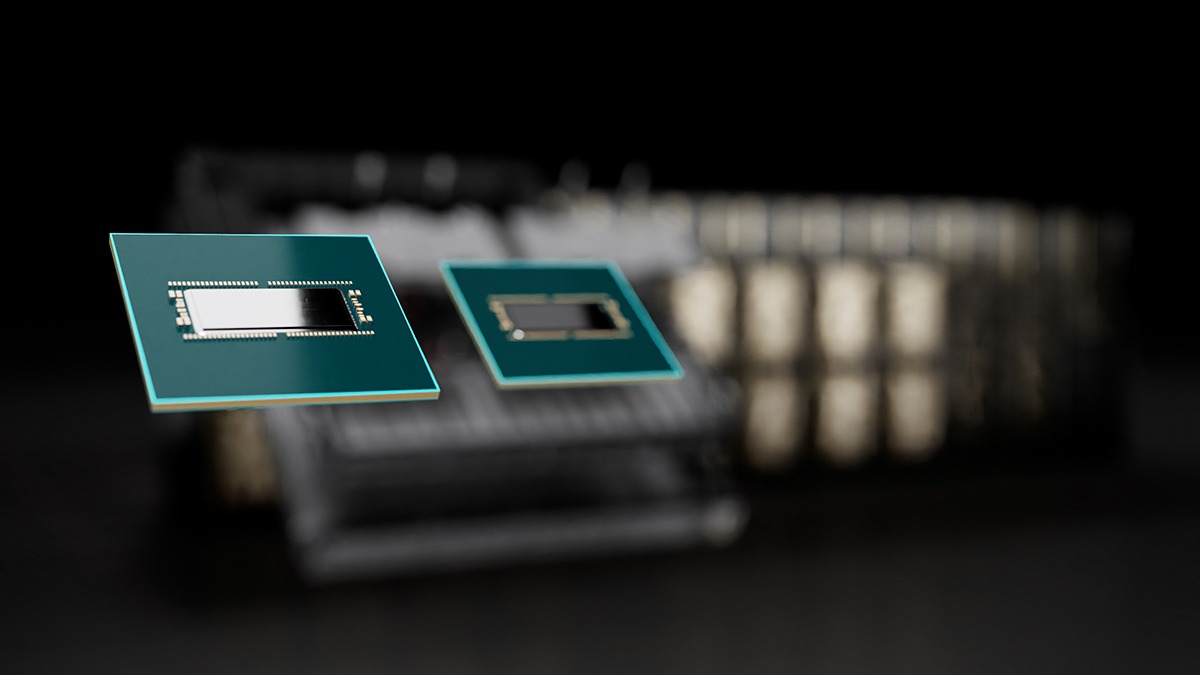
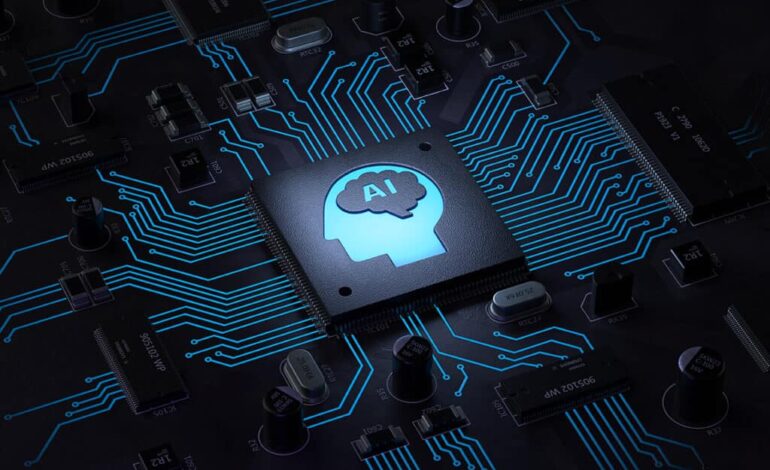
The most prominent dedicated AI accelerator making its way into mainstream PCs is the Neural Processing Unit (NPU). NPUs are specialized microprocessors engineered from the ground up to handle AI and Machine Learning (ML) workloads with unparalleled efficiency. They excel at:
- Optimized AI Math: NPUs feature architectures specifically designed to accelerate the mathematical operations fundamental to neural networks, such as convolutions and matrix calculations.
- Low-Precision Computing: Many AI models can operate effectively using lower numerical precision (e.g., INT8 or FP16), which NPUs are highly optimized for, boosting performance and power efficiency.
Leading chip manufacturers are rapidly integrating NPUs into their PC platforms, coining the term “AI PCs”:
- Intel: With its Core Ultra processors (Meteor Lake), Intel introduced its first integrated NPU, marking a significant step towards on-device AI. Future generations, like Lunar Lake, are poised to further enhance NPU capabilities.
- AMD: AMD’s Ryzen AI technology, powered by its XDNA architecture, integrates an NPU directly into Ryzen processors, enabling efficient AI acceleration for a range of tasks.
- Qualcomm: A leader in mobile AI, Qualcomm’s Snapdragon X Elite platform for Windows PCs features a powerful Hexagon NPU designed for top-tier AI performance and energy efficiency, particularly for thin-and-light laptops.
- Apple: Apple has been at the forefront of on-device AI acceleration with its Neural Engine, integrated into its A-series (iPhone/iPad) and M-series (Mac) chips. This dedicated silicon powers features from computational photography to real-time voice processing.
Expanding the Ecosystem: Beyond the Integrated NPU
The AI accelerator ecosystem extends beyond integrated NPUs, bringing even more specialized or flexible options to the PC:
- Vision Processing Units (VPUs): While often integrated within modern NPUs, standalone or distinct VPU capabilities are highly specialized for computer vision tasks. These units are engineered to efficiently process image and video data for applications like object recognition, facial detection, gesture control, and real-time video analytics. Intel’s Movidius VPUs, for example, were initially developed as dedicated vision accelerators and now their technology is integrated into Intel’s broader NPU strategy. VPUs excel at offloading the intensive visual processing from the CPU and GPU, making AI-powered video effects, enhanced surveillance, and smart camera applications much more efficient on a PC.
- Data Processing Units (DPUs): While primarily designed for data centers and cloud environments (like NVIDIA’s BlueField DPUs) to offload networking, security, and storage tasks from CPUs, the concept of DPUs is increasingly relevant for high-end workstations or specialized PCs that handle massive data streams. A DPU could pre-process incoming data from high-speed networks or storage for an on-device AI model, ensuring data is formatted and ready for the NPU or GPU without burdening the main CPU. This enhances the overall efficiency of AI workloads involving large, real-time datasets. While not typically a direct “AI accelerator” in the same vein as an NPU for model inference, they improve the end-to-end data pipeline for AI.
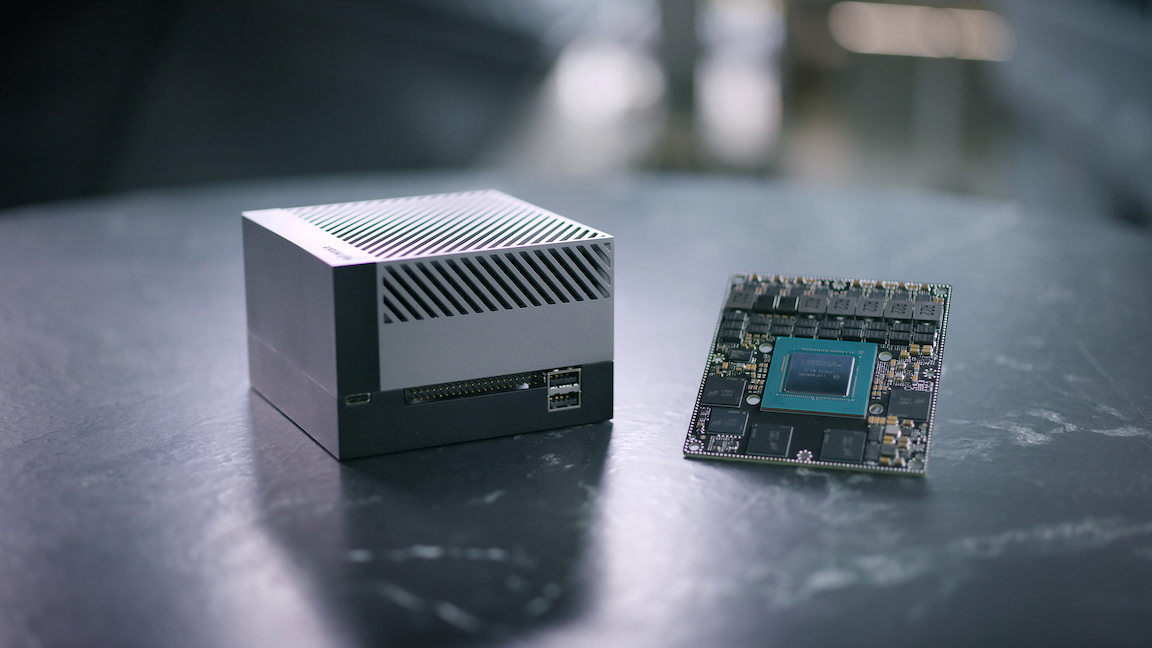
- Modular M.2 or PCIe AI Cards: For users, developers, or system integrators who need more AI horsepower than integrated NPUs can offer, or who want to add AI capabilities to existing systems, dedicated AI accelerator cards are emerging. These come in standard form factors like M.2 (for compact integration in laptops or mini-PCs) or PCIe (for desktop expansion slots). Companies like Hailo (with its Hailo-8 NPU module) and Google Coral (with its Edge TPU modules) offer such solutions. These cards allow users to upgrade or customize their PCs with significant AI inference capabilities, enabling more complex local AI applications such as large language models, advanced computer vision tasks, or industrial automation on edge PCs.
The Future PC: A Hybrid AI Powerhouse
The modern PC is rapidly transforming into a hybrid AI powerhouse, where AI workloads are intelligently distributed across specialized hardware components. Your CPU still takes care of everyday operations and lighter AI tasks. The GPU steps in when heavy lifting is needed, like training AI models or managing high-end graphics. Then there’s the NPU, a newer player designed to handle real-time AI features like voice commands or background blur in video calls—all while using very little power. For anything involving computer vision, such as facial recognition, VPUs (or similar tech built into NPUs) take the lead. And in more advanced setups, we might even see DPUs for speeding up data processing, or modular AI accelerator cards you can add for even more brainpower. Altogether, this shift is turning PCs into smart, efficient AI hubs built for the future.