





The AI Data Center: Why Nvidia’s GPUs and Cloud Infrastructure (AWS, Azure) are the Backbone of Modern AI

The artificial intelligence revolution isn’t just happening in algorithms and models; it’s profoundly reshaping the very infrastructure that powers it. At the heart of this transformation lies the AI data center, a specialized breed of computing facility engineered to meet the extraordinary demands of modern AI workloads. Crucially, the backbone of these AI data centers, and thus of modern AI itself, is formed by the unparalleled synergy between Nvidia’s Graphics Processing Units (GPUs) and the expansive cloud infrastructure of giants like Amazon Web Services (AWS) and Microsoft Azure.
The AI Data Center: A New Breed of Computing Hub
Unlike traditional data centers designed for general-purpose computing and redundant storage, AI data centers are custom-built for agility and immense computational power. They are characterized by:
- Ultra-High-Density Computing: Packed with specialized processors capable of parallel processing.
- Low-Latency Networking: Crucial for rapid data movement between thousands of processors during AI training.
- Advanced Storage Architectures: Optimized for managing and retrieving the massive datasets that fuel AI models.
- Specialized Power and Cooling: To handle the intense energy consumption and heat generation of AI hardware.
These facilities are often hyperscale, meaning they house thousands of servers and are engineered for extreme scalability, perfectly suited for the demands of generative AI and machine learning.
Nvidia’s GPUs: The Unrivaled Engines of AI
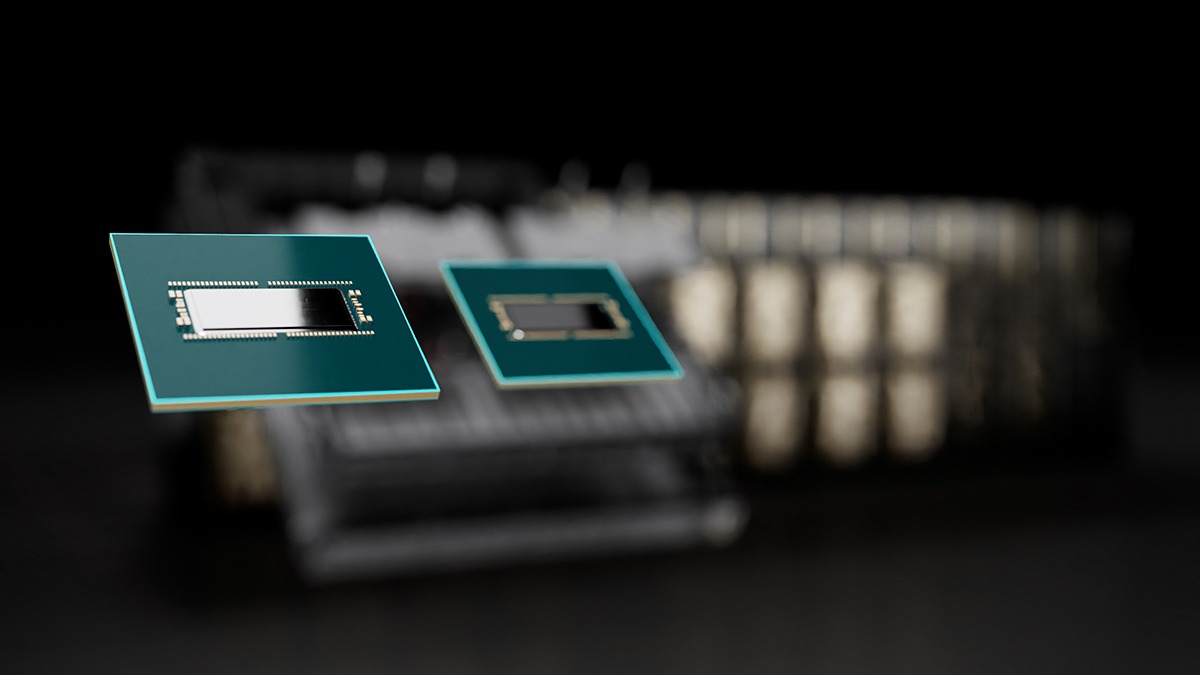
At the core of nearly every major AI breakthrough, particularly in deep learning and large language models (LLMs), lies an Nvidia GPU. Their dominance is not accidental; it stems from a fundamental architectural advantage:
- Parallel Processing Prowess: Unlike Central Processing Units (CPUs) that excel at sequential processing (handling tasks one instruction at a time), GPUs are designed with thousands of smaller, specialized cores that can perform numerous calculations simultaneously. This parallel architecture is perfectly suited for the matrix multiplications and neural network computations that form the bedrock of AI training and inference. When training an LLM, a GPU can process multiple layers of calculations concurrently, drastically reducing training times from days to hours.
- CUDA Ecosystem: Nvidia’s proprietary CUDA (Compute Unified Device Architecture) platform provides developers with a powerful software layer that allows them to program GPUs directly for general-purpose computing. This robust and mature ecosystem of libraries, tools, and developer support has created a significant moat, making it easier for AI researchers and practitioners to leverage Nvidia’s hardware effectively.
- Purpose-Built Architectures: Nvidia’s relentless innovation in GPU architectures, such as Hopper (H100, H200) and Blackwell (GB200), specifically targets AI workloads. Innovations like the Transformer Engine dynamically adjust numerical precision for faster training and inference in LLMs, while vast amounts of High-Bandwidth Memory (HBM) address the memory-intensive nature of modern AI models. These specialized features provide exponential performance leaps over prior generations.
Cloud Infrastructure (AWS, Azure): Democratizing AI at Scale
Even the most powerful GPUs are not enough on their own. The immense scale, accessibility, and managed services offered by hyperscale cloud providers like AWS and Azure are indispensable for modern AI development and deployment:
- Unmatched Scalability and On-Demand Resources: Training cutting-edge AI models can require hundreds or thousands of GPUs for weeks or months. Cloud platforms provide elastic compute resources that can be provisioned on demand and scaled up or down as needed. This flexibility prevents businesses from making massive, upfront hardware investments that might sit idle or quickly become outdated.
- Global Reach and Accessibility: AWS and Azure operate vast networks of data centers across the globe, bringing AI compute closer to users and data, reducing latency, and enabling global AI deployments. This also democratizes access to powerful AI infrastructure for startups and smaller organizations that lack the capital to build their own AI data centers.
- Integrated AI Services and Tooling: Beyond raw compute, cloud providers offer comprehensive AI/ML platforms that integrate seamlessly with their GPU offerings.
- AWS: Services like Amazon SageMaker provide a complete environment for building, training, and deploying ML models. Amazon Bedrock offers access to a range of foundation models, which can be fine-tuned using AWS’s GPU-accelerated instances. The new Amazon Q leverages these powerful backends for enterprise-grade generative AI assistance across various business functions. AWS has also partnered with Nvidia for NVIDIA DGX Cloud on AWS, providing fully managed, high-performance GPU clusters for large-scale AI training.
- Microsoft Azure: Azure offers Azure Machine Learning for end-to-end ML workflows and the Azure OpenAI Service, which provides secure and compliant access to OpenAI’s powerful models (like GPT-4) running on Azure’s robust GPU infrastructure. Azure is also integrating the newest NVIDIA Blackwell platform with its AI services infrastructure and incorporating NVIDIA NIM microservices into Azure AI Foundry to accelerate inference workloads. Their Azure AI Foundry Agent Service allows businesses to customize enterprise-grade AI agents powered by these FMs and GPUs.
- Cost Efficiency: While powerful, GPUs are expensive. Cloud’s pay-as-you-go model allows businesses to manage costs more effectively, paying only for the compute resources they consume, thereby making advanced AI capabilities more economically viable.
The AI Factory: A Symbiotic Relationship
The synergy between Nvidia’s specialized hardware and the cloud’s scalable infrastructure creates what is often referred to as the AI factory. This metaphor describes a continuous process where:
- Massive Datasets (often stored in cloud storage like AWS S3 or Azure Blob Storage) are fed.
- Nvidia GPUs within cloud data centers perform the intensive training.
- Trained AI Models are then deployed for inference (making predictions or generating content) on cloud-based services, leveraging the same GPU infrastructure for real-time performance.
This integrated approach enables rapid iteration, continuous improvement, and the seamless deployment of AI applications at scale, making AI development and deployment an industrialized process.
Challenges and the Future Outlook
Despite this powerful synergy, the AI data center faces significant challenges:
- Immense Power and Cooling Demands: AI workloads are incredibly energy-intensive. Data centers currently account for 2-3% of global electricity consumption, a figure projected to double in five years. This necessitates innovative cooling solutions like direct liquid cooling (DLC) and sustainable energy integration.
- Supply Chain Constraints: The high demand for cutting-edge AI chips, primarily from Nvidia, has led to supply chain bottlenecks, limiting the rapid expansion of AI compute capacity.
- Cost: While cloud democratizes access, running large-scale AI workloads remains expensive, driving research into more efficient models and hardware.
Looking ahead, the AI data center will continue to evolve. We can expect further innovations in GPU architectures, advancements in specialized AI accelerators from various vendors, and continued integration of liquid cooling technologies. The convergence of edge computing with cloud AI will also reshape the distribution of AI processing.
Ultimately, Nvidia’s GPUs provide the raw computational muscle, while AWS and Azure offer the scalable, accessible, and integrated platform necessary to deploy this power globally. Together, they form the indispensable backbone of modern AI, driving its rapid advancement and making its transformative capabilities accessible to businesses worldwide.