


The Nuclear Option for AI: Powering Data Centers with Next-Gen Reactors


The relentless ascent of artificial intelligence is fundamentally reshaping our digital landscape, promising breakthroughs in every sector imaginable. However, this transformative power comes with an increasingly scrutinized environmental and infrastructural challenge: the voracious energy appetite of AI’s computational demands. As AI models grow in complexity and scale, the data centers housing them are pushing existing energy grids to their limits. In response, a powerful, always-on, and carbon-free solution is gaining serious traction: next-generation nuclear reactors. This nuclear option is emerging as a compelling answer to sustain AI’s exponential growth.
The Unprecedented Energy Demands of the AI Era
The computational intensity required to train and run modern AI models, especially large language models (LLMs), is staggering. Industry analyses project that global data center electricity demand could more than double by 2030, potentially reaching 945 terawatt-hours (TWh) – an amount comparable to the current total electricity consumption of nations like Japan. This surge is largely driven by AI workloads, which require immense, continuous power. While the energy used for training a single massive AI model can be significant, the cumulative power draw from billions of daily AI inferences (e.g., search queries, content generation) is becoming an even more substantial and constant load on the grid.
This escalating demand highlights a critical dilemma: how can we power the future of AI without compromising sustainability goals or straining existing power infrastructure? The answer, for a growing number of tech giants and energy strategists, increasingly points towards nuclear power.
Why Nuclear for Data Centers? Unpacking the Advantages
Nuclear energy offers a unique suite of benefits that align remarkably well with the stringent demands of AI-powered data centers:
- Unwavering Baseload Power: Unlike intermittent renewable sources like solar or wind, nuclear plants provide 24/7, highly reliable baseload power, operating at full capacity over 92% of the time. This constant, firm power is ideal for data centers, which require uninterrupted electricity with 99.999%+ reliability.
- Low-Carbon Footprint: During operation, nuclear power plants produce virtually zero greenhouse gas emissions. This is a crucial advantage for tech companies committed to ambitious net-zero and carbon-negative goals, helping them power their energy-intensive AI operations sustainably.
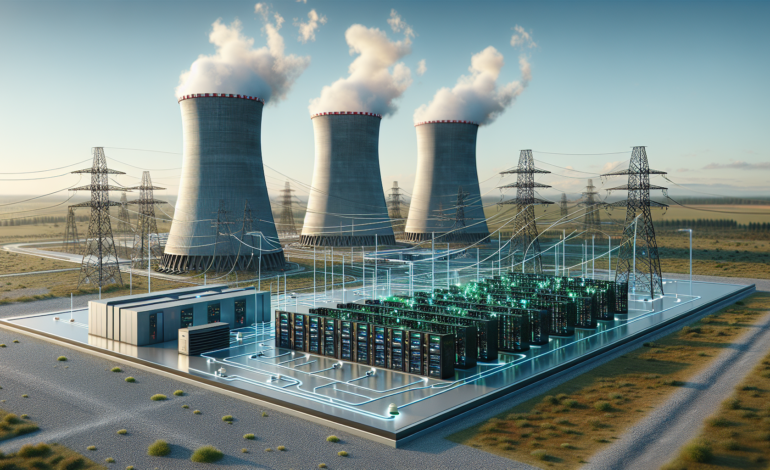
- High Energy Density & Compact Footprint: A small amount of nuclear fuel can generate a vast quantity of electricity. This high energy density translates to a remarkably small physical footprint for power generation compared to other sources, making it more feasible to co-locate power sources with data centers, reducing transmission costs and grid stress.
- Stable Operating Costs: While initial capital costs can be substantial, the operational costs of nuclear power are relatively stable over decades, as fuel costs represent a smaller portion of the total. This predictability aids long-term business planning for hyperscale data centers.
- Grid Resilience and Independence: Co-locating nuclear reactors with data centers can enhance grid stability by providing a dedicated, high-output power source. For security-critical AI operations or military infrastructure, smaller reactors could even offer near grid-independence.
The Rise of Next-Gen Reactors: Small Modular Reactors (SMRs)
The conversation around nuclear power for data centers has been significantly galvanized by the advent of Small Modular Reactors (SMRs). These advanced reactors are a game-changer due to their inherent characteristics:
- Scalability and Flexibility: SMRs have a power capacity of up to 300 MW(e) per unit – roughly one-third of traditional large reactors. Their modular design allows them to be factory-assembled and then transported for installation, offering scalability to match fluctuating data center demands or phased expansion plans.
- Faster Deployment & Lower Costs (Potentially): The modular, factory-based construction of SMRs is expected to lead to shorter construction times and potentially lower costs compared to custom-built, large-scale nuclear plants.
- Enhanced Safety Features: Many SMR designs incorporate advanced passive safety features that rely on natural forces like gravity or convection, reducing the need for active safety systems and enhancing overall safety.
- Wider Siting Options: Their smaller footprint makes SMRs suitable for locations unsuitable for traditional large nuclear power plants, including potentially closer to urban centers or existing industrial sites where data centers are often built.
- Longer Fuel Cycles: Some SMRs are designed to operate for many years (e.g., 3 to 7 years, or even up to 30 years for some designs) without refueling, minimizing operational interruptions.
Big Tech’s Bold Bet: AI Giants Embrace Nuclear
Leading hyperscale cloud providers, facing immense pressure to meet escalating AI power demands while upholding sustainability commitments, are actively exploring and investing in nuclear solutions:
- Microsoft and Three Mile Island: In a landmark move, Microsoft partnered with Constellation Energy in September 2024 to restart Unit 1 of the Three Mile Island nuclear power plant. This 20-year power purchase agreement will provide approximately 835 megawatts of carbon-free energy to support Microsoft’s data center operations, with the reactor expected back online by 2028.
- Google’s SMR Deals: Google has signed agreements for significant nuclear power capacity. In October 2024, Google partnered with Kairos Power to develop, build, and operate a 500 MW fleet of advanced nuclear power plants by 2035, with the first expected online by 2030. Google also committed early-stage development capital to Elementl Power in May 2025, aiming to bring more than 10 GW of new nuclear power capacity online by 2035.
- Amazon and Meta: Amazon Web Services (AWS) acquired a data center campus at Talen Energy’s Susquehanna nuclear power station in Pennsylvania. Amazon is also exploring deploying over 5 GW of new capacity by 2039 using X-energy’s SMR technology. Meta has reportedly issued requests for proposals for up to 4 GW of new nuclear deployments starting in the early 2030s.
These commitments underscore a growing recognition that nuclear power, particularly next-generation SMRs, can provide the reliable, always-on, clean energy required for the future of AI.
Challenges on the Path to Nuclear-Powered AI
Despite the compelling advantages, integrating nuclear power into the data center landscape faces significant hurdles:
- Deployment Timelines: While SMRs promise faster construction than traditional plants, widespread commercial deployment is still in its early stages. The first commercial SMRs are generally not expected to come online until the early to mid-2030s, posing a temporal disconnect with the immediate and urgent power demands of hyperscale data centers, which have much shorter deployment cycles.
- Upfront Costs and Financing: New nuclear reactor deployments, even SMRs, still entail substantial upfront capital construction costs. While factory fabrication aims to reduce these, initial deployments can be expensive, requiring significant investment and innovative financing models.
- Regulatory Hurdles: The nuclear industry is heavily regulated to ensure safety. Navigating licensing, permitting, and regulatory approvals for new reactor designs and deployments can be a lengthy and complex process.
- Public Perception and Waste Management: Historical accidents have fueled public skepticism about nuclear power. Addressing concerns about safety, security, and the long-term management and disposal of nuclear waste remains crucial for public acceptance and successful project implementation.
- Integration with Fluctuating Loads: Data center power consumption can fluctuate dynamically. While nuclear provides baseload power, integrating it seamlessly with highly variable AI workloads will require sophisticated energy management systems.
A Power Shift in the Digital Age
The future of AI is intrinsically linked to a reliable, clean, and abundant energy supply. While challenges remain, the renewed interest from major tech players signals a significant shift towards nuclear power as a viable and increasingly attractive ‘nuclear option’ for powering the next generation of data centers. As SMR technology matures and regulatory frameworks adapt, these compact, high-output reactors could become a cornerstone of sustainable AI growth, ensuring that the digital revolution can continue without compromising our planet’s future.