





The Convergence of AI and Robotics: Creating Intelligent Machines for Home and Industry

The fusion of Artificial Intelligence (AI) and robotics marks a pivotal moment in technological evolution. Intelligent machines are rapidly transitioning from conceptual designs to tangible realities, fundamentally reshaping both our domestic environments and industrial landscapes. This powerful convergence is creating a new generation of robots capable of perceiving, learning, reasoning, and adapting, transforming everything from household chores to complex manufacturing processes.
Beyond Automation: The Intelligence Infusion
Traditional robots, while efficient, are largely programmed for repetitive tasks within structured environments. They excel at precision and speed but lack the ability to adapt to unforeseen circumstances or learn from experience. This is where AI steps in. By imbuing robots with AI capabilities, they gain:
- Perception and Understanding: Through technologies like computer vision (using 2D/3D cameras and LiDAR sensors) and sensor fusion (integrating data from various sensors like force, vibration, and proximity), AI enables robots to “see” and “understand” their surroundings. This allows them to segment scenes, detect and classify objects, and build real-time digital maps of their environment.
- Decision-Making and Autonomy: Machine learning, especially deep learning and reinforcement learning, empowers robots to make intelligent decisions in dynamic environments. Instead of following rigid pre-programmed paths, AI-powered robots can analyze gathered information, make inferences, choose optimal actions, and even reroute to avoid obstacles or adapt to changes.
- Learning and Adaptation: This is perhaps the most transformative aspect. AI enables robots to learn from real-time data and contextual information, progressively improving their task execution over time. They can develop new learning pathways, solve novel problems as they encounter them, and even learn from direct human-robot interactions (e.g., speech and gestures) without explicit reprogramming.
- Natural Language Processing (NLP) & Conversational AI: For more intuitive human-robot interaction, NLP allows robots to understand human language, both spoken and written. Conversational AI, or generative AI (GenAI), takes this further, enabling more human-like interactions, allowing robots to process dialogue, respond, and anticipate future interactions.
Intelligent Machines in Our Homes: The Smart Living Revolution
The convergence of AI and robotics is making our homes smarter, safer, and more efficient:
- Voice Assistants and Smart Automation: While not “robots” in the traditional sense, devices like Amazon’s Alexa, Google Assistant, and Apple’s Siri are prime examples of AI powering home automation. They learn user preferences, control smart lights, thermostats, and appliances via voice commands, and schedule routines based on behavior patterns.
- Autonomous Cleaning Robots: The ubiquitous robot vacuum (e.g., iRobot Roomba) is a classic example of AI-powered robotics in the home. Modern versions use AI to map spaces, navigate around obstacles, learn optimal cleaning paths, and even recognize specific objects to avoid. Mopping robots like Braava also leverage AI for efficient and targeted cleaning.
- Home Security and Surveillance: AI-powered security cameras and motion sensors can distinguish between family members and strangers using facial recognition, detect unusual activities, and send real-time alerts. They can integrate with smart locks and alarm systems for enhanced safety.
- Smart Appliances and Health Monitoring: AI-enhanced smart refrigerators can recommend grocery lists, washing machines can suggest optimal cycles, and dishwashers can detect faults. For health, AI-driven devices can monitor sleep patterns, detect falls in elderly residents, track air quality, and adjust home environments for well-being.
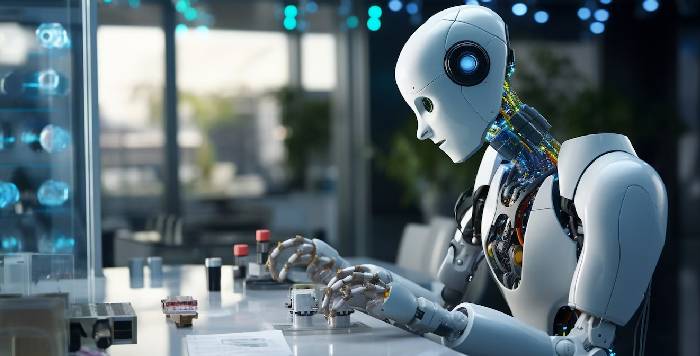
- Personal & Companion Robots: While still an emerging segment, humanoid robots are being developed for domestic assistance and companionship. These robots aim to offer more human-like interactions, provide assistance with daily tasks, and even offer emotional support, moving towards a future where robots are integrated members of the household.
Intelligent Machines in Industry: The Factory of the Future
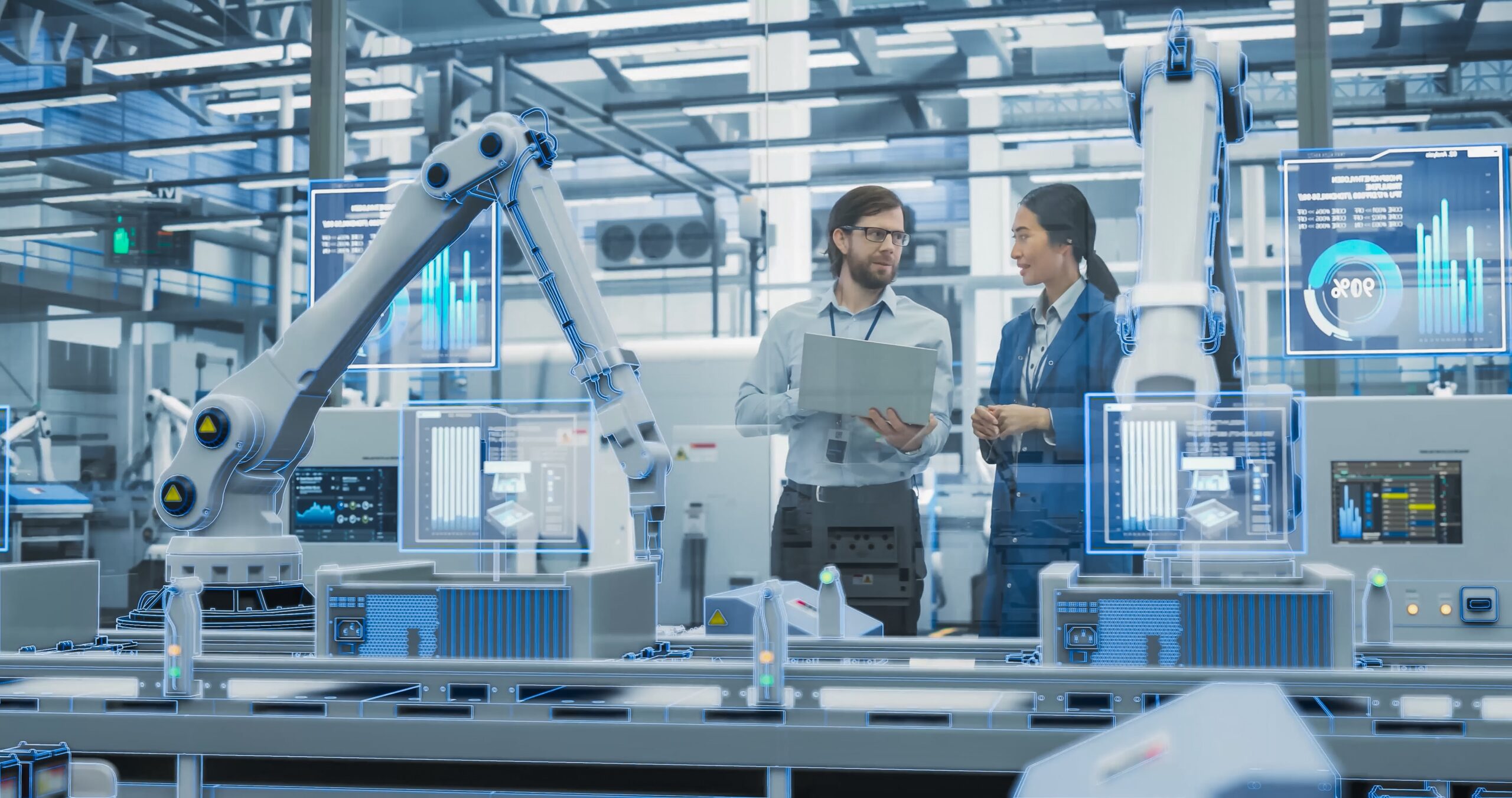
In industrial settings, AI-powered robots are driving the Industry 4.0 revolution, creating hyper-efficient, flexible, and safer smart factories:
- Collaborative Robots (Cobots): Unlike traditional industrial robots, cobots are designed to work safely alongside human operators without physical barriers. AI gives cobots the ability to understand human speech, gestures, and even intentions, allowing them to adapt their movements and tasks in real-time. This enhances safety through intelligent sensing and drives operational efficiency by augmenting human capabilities.
- Autonomous Mobile Robots (AMRs): AMRs, often found in warehouses and logistics centers, use AI for self-navigation, object detection, and path optimization. Equipped with 3D cameras and LiDAR, they can build and update digital maps, reroute to avoid obstacles (human workers or fallen boxes), and determine the most efficient paths for material transport, vastly improving efficiency and safety in dynamic environments.
- Advanced Manufacturing Automation:
- Precision Assembly & Welding: AI allows robotic arms to perform tasks like spot welding, painting, material handling, and assembly with superhuman speed, accuracy, and consistency, even in complex or hard-to-reach areas.
- Quality Inspection: AI-powered vision systems enable robots to conduct rapid, highly accurate quality inspections on assembly lines, identifying defects that human eyes might miss and reducing waste by catching issues early.
- Predictive Maintenance: Robots and machines generate vast amounts of operational data. AI analyzes this data to predict equipment failures before they occur, allowing for proactive maintenance, minimizing downtime, and optimizing overall equipment effectiveness (OEE).
- Logistics and Warehousing: AI-driven robots are transforming inventory management, order fulfillment, and transportation. They can automate picking, packing, and sorting tasks with greater speed and precision, optimize routes for delivery, and provide real-time visibility into supply chain operations. Companies like Symbotic use AI platforms to orchestrate entire fleets of robots.
- Hazardous Environments: AI-powered robots are indispensable in dangerous settings, such as handling nuclear waste, performing inspections in hazardous chemical plants, or assisting in precise surgical procedures in healthcare, ensuring human safety.
The Future: A Seamless Integration
The convergence of AI and robotics is not just about making robots smarter; it’s about making entire systems more intelligent and responsive. This integration promises:
- Increased Productivity: Automating repetitive, dangerous, or precise tasks, freeing human workers for more creative and complex problem-solving.
- Enhanced Safety: Robots taking on hazardous jobs and AI-powered perception systems preventing accidents in shared workspaces.
- Unprecedented Efficiency: Real-time data analysis and adaptive learning, leading to optimized workflows, reduced waste, and lower operational costs.
- New Capabilities: Enabling tasks that were previously impossible, from micro-assembly to hyper-personalized domestic services.
While challenges remain in areas like ethical considerations, data quality, and seamless integration with legacy systems, the trajectory is clear. The synergy between AI and robotics is creating intelligent machines that will continue to evolve, learning and adapting to become indispensable partners, transforming both our daily lives at home and the core operations of industries worldwide