




Autonomous Drones: New Applications in Delivery, Inspection, and Surveillance

The rapid evolution of drone technology, significantly propelled by advancements in artificial intelligence (AI) and sensor capabilities, has ushered in an era of autonomous drones. These aren’t just remote-controlled flying cameras; they are intelligent aerial robots capable of independent navigation, complex decision-making, and executing tasks without continuous human intervention. This leap in autonomy is unlocking a vast array of new applications, revolutionizing sectors from logistics to critical infrastructure management and public safety.
Understanding Autonomous Drones: Intelligence in the Sky
What distinguishes an autonomous drone from a standard remotely piloted one is its embedded intelligence. These sophisticated machines integrate:
- Advanced Sensors: Equipped with a suite of sensors including GPS, inertial measurement units (IMUs), LiDAR (Light Detection and Ranging), high-resolution cameras (RGB, thermal, multispectral), and ultrasonic sensors.
- Onboard AI and Machine Learning: Powerful processors running AI algorithms enable real-time data analysis, object recognition, obstacle avoidance, and dynamic path planning. This allows the drone to perceive its environment, understand its mission, and make intelligent decisions independently.
- Computer Vision: Crucial for autonomous navigation and task execution, computer vision systems allow drones to interpret visual data, identify specific targets, detect anomalies, and track movement.
- Edge Computing: Often, initial data processing and critical decision-making occur directly on the drone (at the “edge”), minimizing latency and allowing for immediate reactions, even when cloud connectivity is limited.
This amalgamation of hardware and software enables drones to perform complex operations with minimal human oversight, redefining efficiency, and safety in aerial applications.
Revolutionizing Logistics: Autonomous Drone Delivery
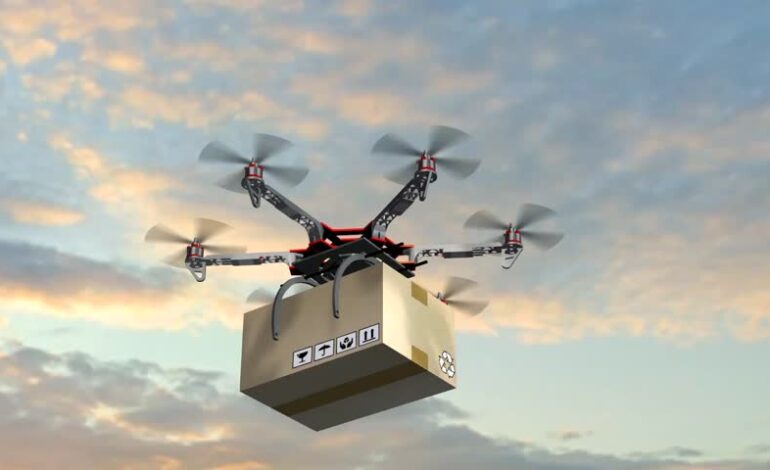
The vision of packages arriving at your doorstep via drone is rapidly becoming a reality, driven by autonomous capabilities. Autonomous drones are poised to transform the delivery landscape, offering speed, efficiency, and cost-effectiveness:
- Package Delivery: Companies like Amazon Prime Air and Wing (an Alphabet company) have been actively developing and trialing autonomous drone delivery services. These drones can pick up packages from distribution centers and deliver them directly to customer backyards, often completing deliveries within minutes rather than hours or days. Amazon’s MK30 drone, for example, is designed to fly twice as far as its predecessors, carrying payloads up to 5 pounds, and can operate in varied weather conditions.
- Medical Supplies & Emergency Aid: Autonomous drones are increasingly deployed for rapid delivery of critical medical supplies (e.g., blood, vaccines, organs) to remote or hard-to-reach areas, significantly cutting down transport times in emergencies. Zipline, a prominent player, has conducted over 600,000 commercial drone deliveries of medical products and food across multiple countries, demonstrating high reliability and speed.
- Food Delivery: Services are emerging where restaurants or ghost kitchens can dispatch hot meals via autonomous drones, offering a faster and potentially more sustainable alternative to traditional road-based delivery.
The benefits here are clear: reduced delivery times, lower operational costs (especially for last-mile delivery), decreased traffic congestion, and improved access for remote communities.
Enhanced Precision: Autonomous Drones for Inspection
Inspecting critical infrastructure, industrial assets, and large-scale facilities is traditionally time-consuming, costly, and often hazardous for humans. Autonomous drones are transforming this sector by providing safer, faster, and more accurate inspection capabilities:
- Infrastructure Monitoring: Drones can autonomously inspect bridges, power lines, wind turbines, pipelines, and railway tracks. They can capture high-resolution visual, thermal, and LiDAR data to detect anomalies, corrosion, cracks, or wear and tear that might be invisible to the naked eye. This reduces the need for human inspectors to work at heights or in dangerous environments.
- Industrial and Construction Sites: Autonomous drones monitor construction progress, perform volumetric surveys (e.g., calculating aggregate stockpiles), and inspect equipment in factories or oil and gas facilities. Their ability to follow pre-programmed flight paths and capture consistent data makes progress tracking and defect detection highly efficient.
- Agricultural Intelligence: In precision agriculture, drones equipped with multispectral cameras autonomously survey vast fields, collecting data on crop health, moisture levels, and pest infestations. This allows farmers to apply resources (water, fertilizer, pesticides) more efficiently, reducing waste and increasing yields.
- Roof and Building Inspections: Drones can quickly and safely inspect building exteriors and roofs, identifying damage, insulation issues, or structural problems without the need for scaffolding or ladders.
The key advantages include significantly improved safety for personnel, faster data collection, enhanced data accuracy and consistency, and reduced operational costs compared to traditional methods.
Smarter Eyes in the Sky: Autonomous Drones for Surveillance
For security, public safety, and environmental monitoring, autonomous drones offer an unprecedented capability to gather real-time intelligence from the air, often in areas difficult or dangerous for human access:
- Border Patrol & Perimeter Security: Autonomous drones can continuously patrol borders, critical infrastructure (e.g., power plants, data centers), and large perimeters, using AI-powered computer vision to detect unauthorized intrusions or suspicious activities. They can identify and track targets, providing real-time alerts to human security teams.
- Crowd Monitoring and Event Security: During large public gatherings, autonomous drones can provide aerial surveillance, monitor crowd density, identify potential safety hazards, and track individuals of interest, enhancing overall security and emergency response coordination.
- Disaster Assessment & Emergency Response: In natural disasters (earthquakes, floods, wildfires), autonomous drones can rapidly survey damaged areas, create 3D maps, locate trapped individuals, and assess the extent of destruction, providing critical information to first responders when human access is too dangerous or impossible.
- Wildlife Monitoring & Anti-Poaching: Drones can autonomously monitor vast wildlife reserves, using thermal cameras to detect animals or human intruders (poachers), significantly aiding conservation efforts.
- Environmental Monitoring: They can collect data on air quality, water pollution, and deforestation, providing real-time insights for environmental protection and regulatory compliance.
Autonomous surveillance drones offer continuous, cost-effective monitoring, real-time data feeds, and the ability to access hazardous or remote locations without risking human lives.
Challenges and the Path Forward
Despite their immense potential, widespread adoption of autonomous drones faces several hurdles:
- Regulatory Frameworks: Aviation authorities worldwide (e.g., FAA in the U.S.) are working to develop comprehensive regulations for Beyond Visual Line of Sight (BVLOS) operations, urban airspace management, and drone integration into national airspace, which is critical for scaling autonomous applications.
- Public Acceptance: Concerns regarding privacy (especially with surveillance), noise pollution, and safety need to be addressed through transparent operations and public education.
- Battery Life and Payload: While improving, battery life still limits drone endurance and payload capacity for many applications.
- Cybersecurity: Ensuring the security of autonomous drones from hacking or malicious interference is paramount, given their critical roles.
The future of autonomous drones is incredibly promising. As AI capabilities advance, battery technology improves, and regulatory landscapes evolve, these intelligent machines are set to become ubiquitous tools, transforming industries and reshaping our interactions with the physical world through their unparalleled ability to deliver, inspect, and monitor from the skies.