





The Energy Footprint of AI: Understanding the Infrastructure Challenges and Innovations for Sustainable AI Growth

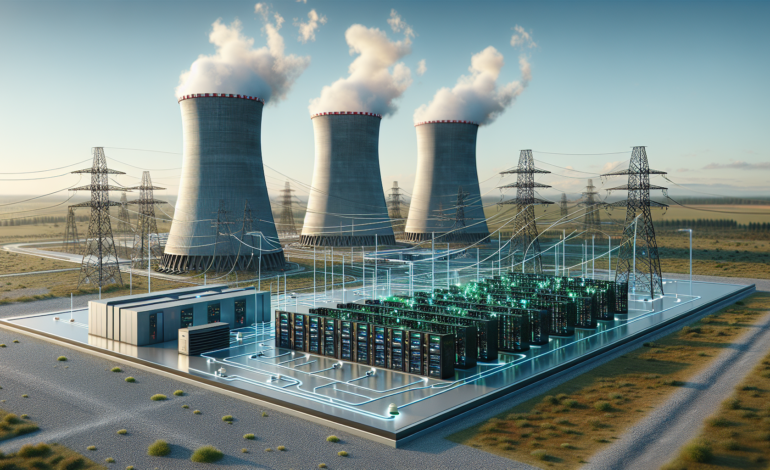
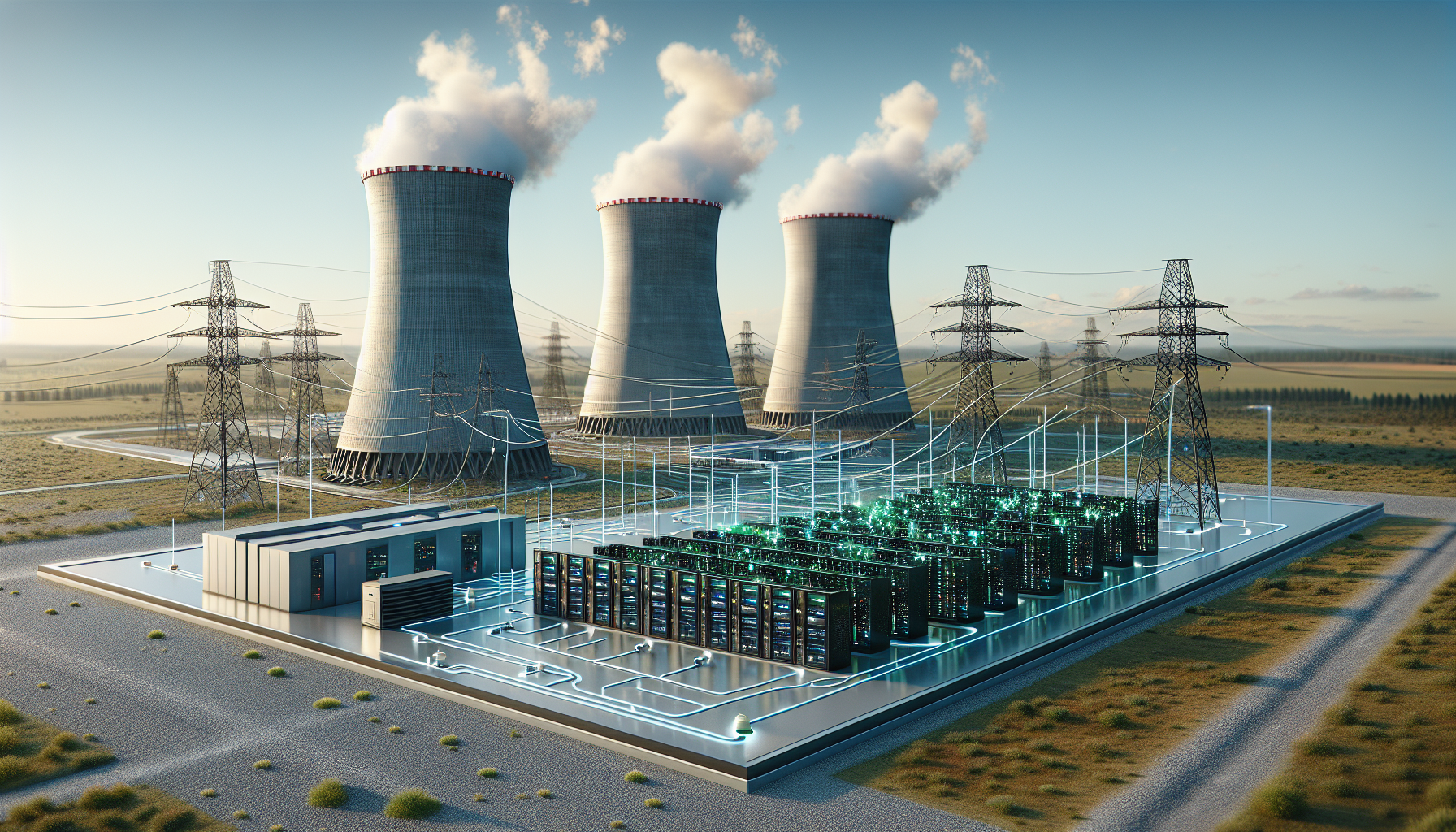
Artificial intelligence is undeniably revolutionizing industries and daily life, yet its exponential growth brings a mounting environmental challenge: a significant energy footprint. The computational demands of training and operating sophisticated AI models, coupled with the vast energy consumption of the underlying data center infrastructure, underscore the critical need for a Sustainable AI paradigm. This article delves into the core infrastructure challenges posed by AI’s energy appetite and explores the innovative solutions crucial for fostering sustainable AI growth.
The Intensifying Energy Demands of Artificial Intelligence
The development and deployment of advanced AI, particularly large language models (LLMs) and generative AI, require unprecedented computational power, translating directly into substantial energy consumption. While precise figures are challenging to ascertain due to proprietary data and varying methodologies, several reports highlight the scale of the issue:
- Growing Data Center Demand: The International Energy Agency (IEA) projects that global data center electricity demand could more than double by 2030, reaching approximately 945 terawatt-hours (TWh), a figure comparable to Japan’s entire electricity consumption today. AI workloads are a primary driver of this projected surge.
- Training vs. Inference: While AI model training is notoriously energy-intensive (e.g., a single large AI model’s training can emit hundreds of tons of CO2e), the cumulative energy consumption from inference (the repeated application of trained models) for billions of daily queries or automated tasks is increasingly becoming the more dominant factor. A single query on a large generative AI model like ChatGPT, for instance, can consume significantly more energy than a typical Google search.
- Lack of Transparency: A persistent challenge is the limited public data provided by companies regarding the specific energy consumption of their AI models and operations, making accurate assessments of AI’s total carbon footprint difficult for the scientific community.
Infrastructure Challenges: The Bottlenecks of AI Growth
The rapid expansion of AI workloads places immense pressure on existing data center infrastructure, presenting several critical challenges:
- Exacerbated Heat Density: AI chips, particularly GPUs and specialized AI accelerators, perform trillions of operations per second, generating significantly more heat per square foot than traditional server hardware. This intense heat density quickly overwhelms conventional air-cooling systems.
- Power Delivery Limitations: Supplying enough clean, consistent, and high-voltage power to racks packed with AI accelerators becomes a major hurdle. Existing electrical infrastructure in many data centers may not be designed for such concentrated power demands, leading to the need for costly upgrades or entirely new builds.
- Network Scalability: As AI applications expand, the demand for ultra-high-bandwidth, low-latency network resources within and between data centers escalates exponentially. Traditional network setups struggle to keep pace, risking performance bottlenecks and downtime.
- Water Consumption: Beyond electricity, data centers, especially those relying on evaporative cooling towers, can consume vast amounts of water. For example, some studies suggest that training a large language model like GPT-3 can consume millions of gallons of fresh water.
- E-Waste Generation: The rapid obsolescence of AI-specific hardware, driven by continuous innovation, contributes to a growing volume of electronic waste, posing disposal and recycling challenges.
Innovations for Sustainable AI Growth
Addressing these challenges requires a multi-pronged approach, encompassing advancements in both AI model design and data center infrastructure:
Innovations in Energy-Efficient AI Models:
- Model Optimization Techniques: Researchers are focusing on making AI models inherently more efficient.
- Quantization: Reducing the numerical precision of model parameters (e.g., from 32-bit floating point to 8-bit integers) significantly cuts down memory and computational requirements.
- Pruning & Sparsity: Eliminating redundant connections or neurons in neural networks and designing models that are “sparse” (with fewer active connections) can lead to substantial computational reductions.
- Knowledge Distillation: Training smaller, more efficient “student” models to mimic the performance of larger, more complex “teacher” models.
- Hardware-Software Co-design: Developing AI algorithms and models that are specifically optimized to run efficiently on specialized, energy-efficient hardware.
- Neuromorphic Computing: This emerging field aims to mimic the brain’s highly energy-efficient structure by integrating memory and processing, often using “spiking neural networks.” While still nascent, neuromorphic chips hold the promise of drastically reducing energy consumption for certain AI tasks.
Innovations in Sustainable Data Center Infrastructure:
- Advanced Cooling Systems: Moving beyond traditional air-cooling is paramount for high-density AI workloads.
- Liquid-to-Chip (Direct-to-Chip) Cooling: Cold plates are placed directly on hot components (like CPUs and GPUs), with liquid coolant flowing through them. This method is significantly more efficient at heat transfer than air.
- Immersion Cooling: Submerging servers entirely in non-conductive dielectric fluid. This can reduce cooling energy consumption by up to 50% and allows for ultra-high server densities. Companies like Submer and CoolIT Systems are leading this.
- Closed-Loop Systems: Modern liquid cooling systems often operate in closed loops, eliminating the need for evaporative cooling towers and drastically reducing water usage.
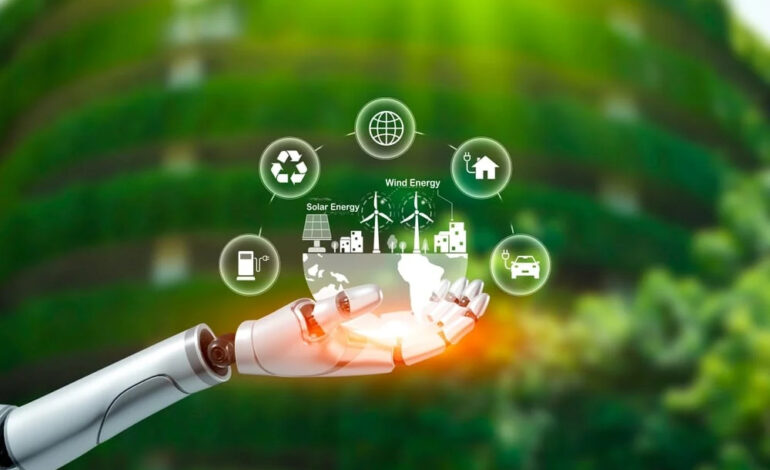
- Renewable Energy Sourcing: Leading tech companies are increasingly committing to powering their data centers with 100% renewable energy through direct procurement or Power Purchase Agreements (PPAs) that fund new solar, wind, and hydroelectric projects.
- Waste Heat Reuse: Instead of simply exhausting hot air or liquid, innovative data centers are designed to capture and reuse this waste heat. Examples include heating nearby buildings, greenhouses, or even public facilities like swimming pools (e.g., Equinix in Paris heating the Olympic Aquatics Center).
- AI for Data Center Optimization: Ironically, AI itself is being leveraged to make data centers more sustainable. AI algorithms can optimize energy distribution, predict energy demand, fine-tune cooling systems, and manage workloads dynamically to reduce overall energy consumption. Google, for instance, has demonstrated the ability to reduce power demand by shifting computational loads.
- Dynamic Power Management: Processors (like Intel’s Sapphire Rapids and AMD’s EPYC) are designed with dynamic power management features that adjust power usage based on workload demands, optimizing performance per watt.
Charting a Course for Green AI Growth
The rapid advancement of AI necessitates a parallel commitment to sustainability. The energy footprint of AI’s infrastructure is a complex challenge, but ongoing innovations in both model design and data center operations offer a clear path forward. By prioritizing efficient algorithms, embracing specialized hardware, and investing in renewable-powered, liquid-cooled, and heat-recovering data centers, the AI industry can mature responsibly, ensuring that its profound benefits do not come at an unsustainable cost to our planet. The future of AI must be intelligent, powerful, and unequivocally green.